Boosted Conversions
How Gelora App Booking Features Update Can Boosted Conversion.
Background
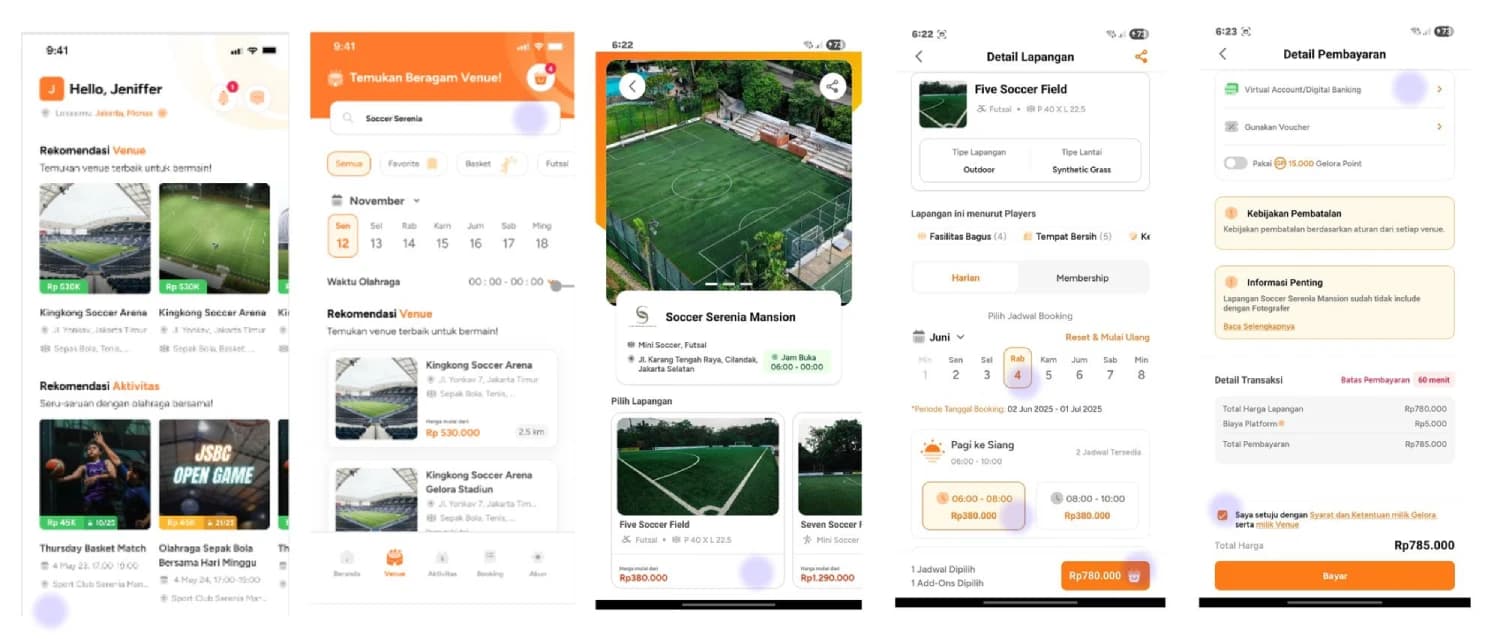
Following the post-launch stabilization period, our team began to identify important signals from user feedback. I found that the booking flow in version 1.0 of the app was considered impractical. Some users felt the process was not direct and required too many steps to complete a field reservation. Although this was not a universal issue, a portion of our users felt their experience did not meet expectations. As a result, booking growth through the app did not show a significant increase, and the website remained the favorite channel for users.
Observe
As mentioned previously, some users complained that the booking flow was inefficient and felt too long. To address this, I started with a short research phase to confirm these findings through interviews and data analysis.
The research began with registration and booking data, which revealed a very promising pattern. It turned out that not all users felt the booking flow was too long. I discovered that these complaints generally came from users who had accounts older than two months or those who booked frequently. This initial finding led us to identify two types of users: Experienced Users and Non-Experienced Users, each with different characteristics.
👥 Experienced users have the following characteristics:
- Have made more than 3 bookings.
- Generally registered for more than two months.
- Tend to regularly book at the same location.
- Accustomed to using the quick-booking feature on the website, making the absence of a similar feature in the app a gap in expectations.
From the research results, the experience of "Experienced Users" showed that they no longer needed detailed information about the venue (such as the number/type of fields, location, price, or rules) because they were already familiar with it. They only required crucial information like slot availability and the existence of discounts or promos.
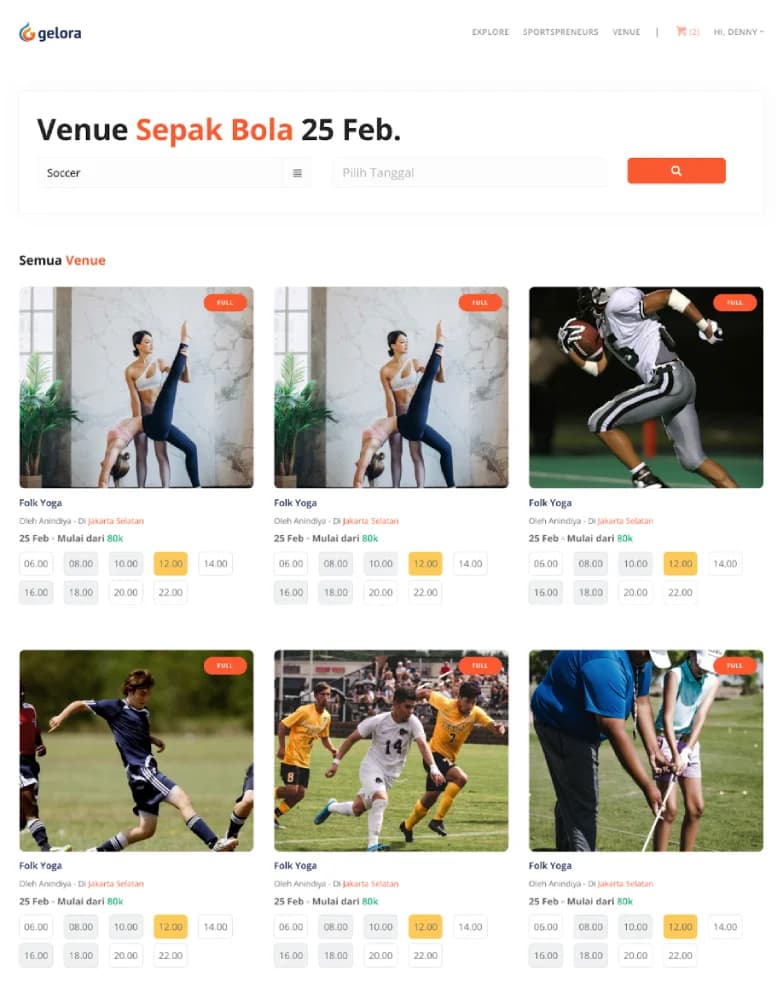
A deeper investigation led me to a feature that had previously run. Through product development records, the team had performed A/B testing on the website to compare two different booking flows, one of which was called "quick-booking." At that time, this test aimed to see which flow was more preferred. The results showed that the quick-booking flow on the website had much higher traffic compared to the existing booking flow at the time.
Insight
From the observation above, I gained clarity that in this case, there are two types of users: New Users (Non-experience Users) and Old Users (Experience Users). The results from the quick-booking A/B testing on the website previously became a strong suggestion to implement a similar feature in the app as a solution.
Therefore, it was concluded that there was actually no problem with the default (existing) booking flow or display for users in general. However, what actually happened was a shift in the user experience during booking for users who frequently use the app (experienced/expert users) - Insight Statement.
Ideation
Based on the observations and our insight statement, a "Quick Booking" flow for the mobile app is very worth considering. However, this feature needs to be improved with several additions to overcome the weaknesses found in the previous website version.
Features to be added include:
- Showing all available slots for all fields within a single venue to give users a comprehensive overview.
- Allowing users to easily compare empty slots across different fields.
- Ensuring the "add-to-cart" or booking process simple and intuitive.
It is important to remember that this new flow will not replace the default or existing booking flow. The goal is to ensure that non-experienced users (new users) can still access venue and field details so they understand the context of each step in the purchase process.
Concept Model
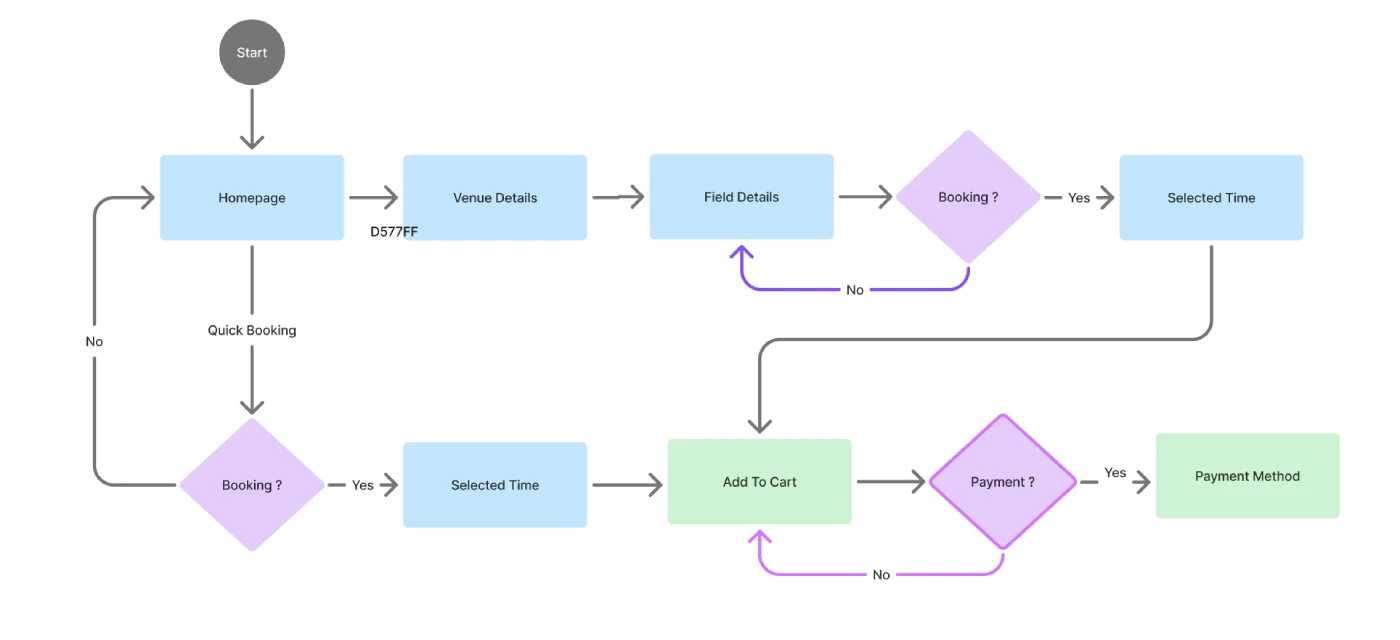
Here is the conceptual flow for the two idea categories: "Experience User" and "Non-Experience User":
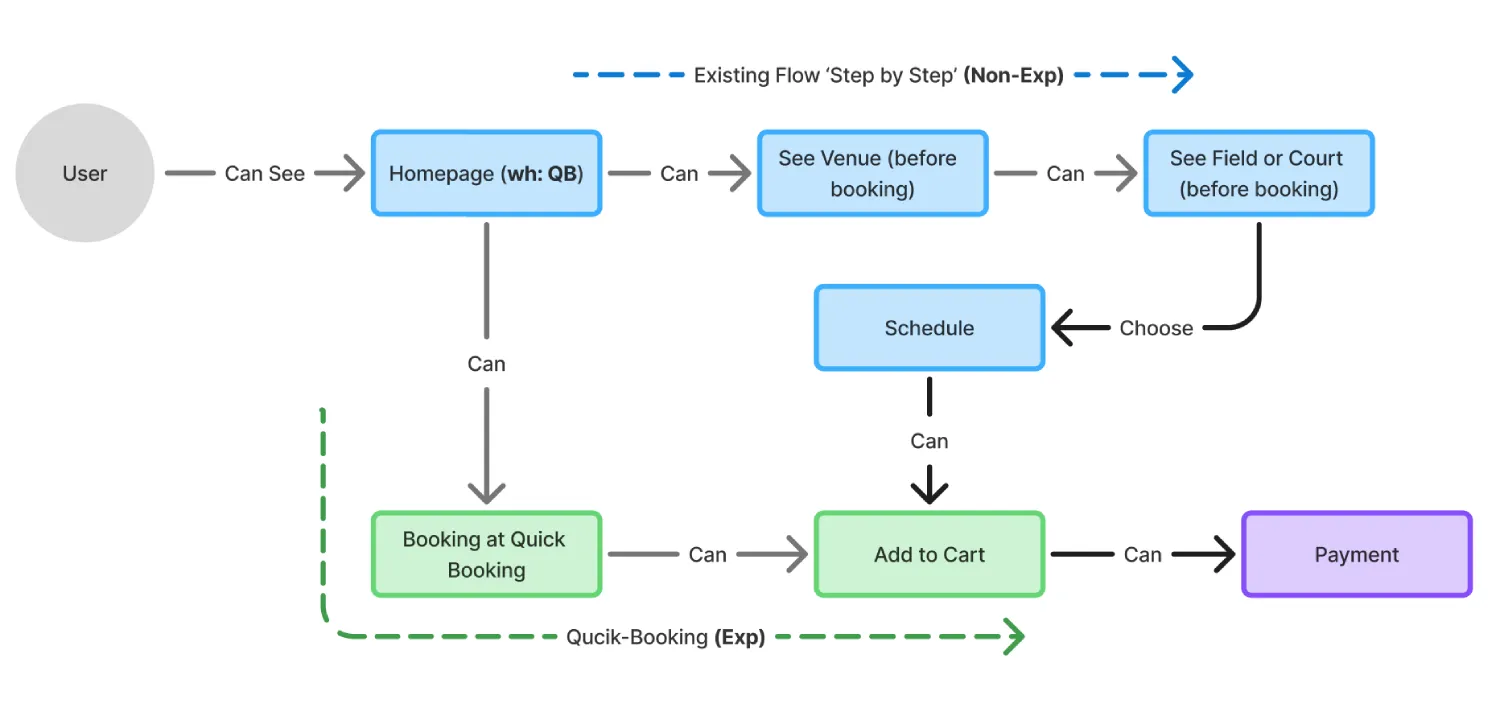
During the process, the team added a small detail to the conceptual flow. The team agreed to change the old name "Quick-Booking" to "Fast-Booking." Moving forward, this product development will be named Fast-Booking.
Quick JTBD (Jobs To Be Done)
To provide clearer direction for product development, I included a brief JTBD to make the user flow mapping process easier.
Non-Experienced Users :
- As a new user, I want to know about all the services within the app.
- As a new user, I want to get complete information about locations (venues), fields, facilities, and available features quickly.
- As a new user, I want to be able to make a booking after I have confirmed the location and time slot I want.
Experienced Users :
- As an experienced user, I know exactly which field I want to use. I expect a fast and direct booking process without following the standard flow.
- As an experienced user, I want to be able to make a quick comparison of slot availability at several locations (venues).
User Flow
Next, I created a user flow based on the conceptual model and JTBD. Below is the user flow applied to the app for the "Fast-Booking" journey on the homepage.
Wireframe
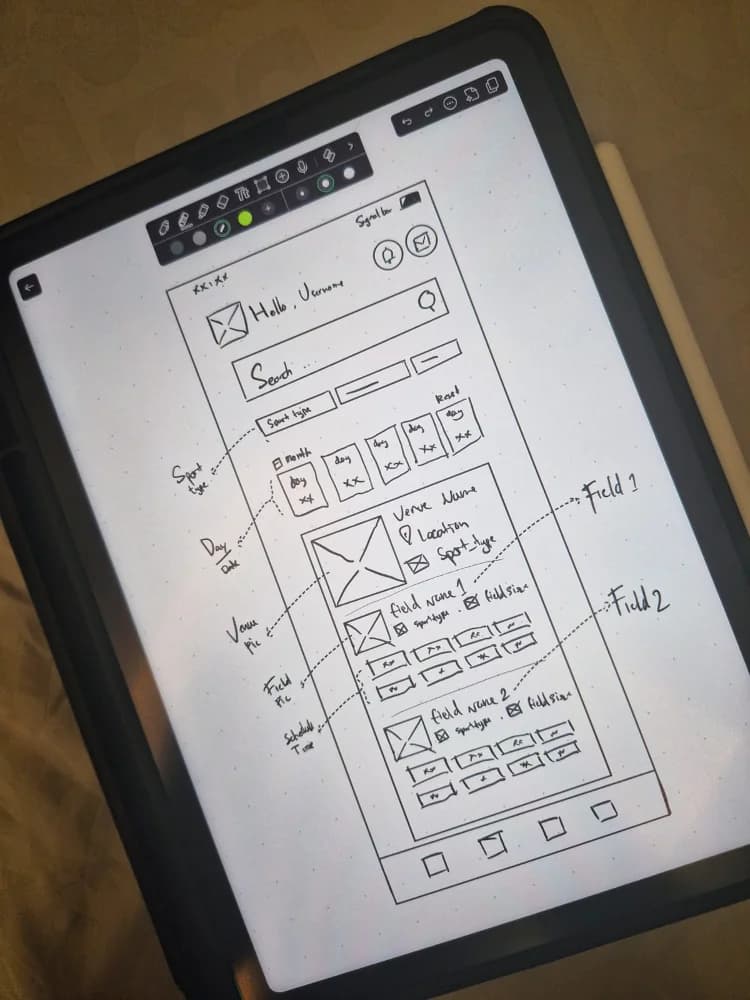
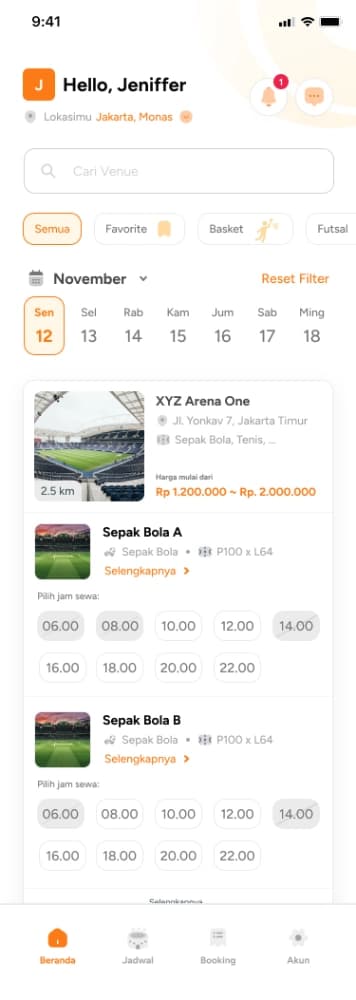
This was followed by creating wireframes or initial sketches to implement the solution, where users can directly find available slots for every field in a venue on the homepage without having to enter the venue details.
User Interface (UI)
After the wireframes were agreed upon by the team, the process continued to the mockup stage, involving the use of the design system or style guide that had already been implemented.
Scope & Sign-Off
Before development began, I translated the Fast Booking concept into a PRD that defined the feature scope, functional requirements, and acceptance criteria — including edge cases like a venue reaching full capacity or a slot becoming unavailable mid-selection. This became the reference the engineering team worked from during sprint planning, and it kept design, backend, and QA aligned on what needed to ship for the media conference launch. Once development was complete, the team and I ran a short UAT to walk through the flow against those criteria before signing off for release.
Release
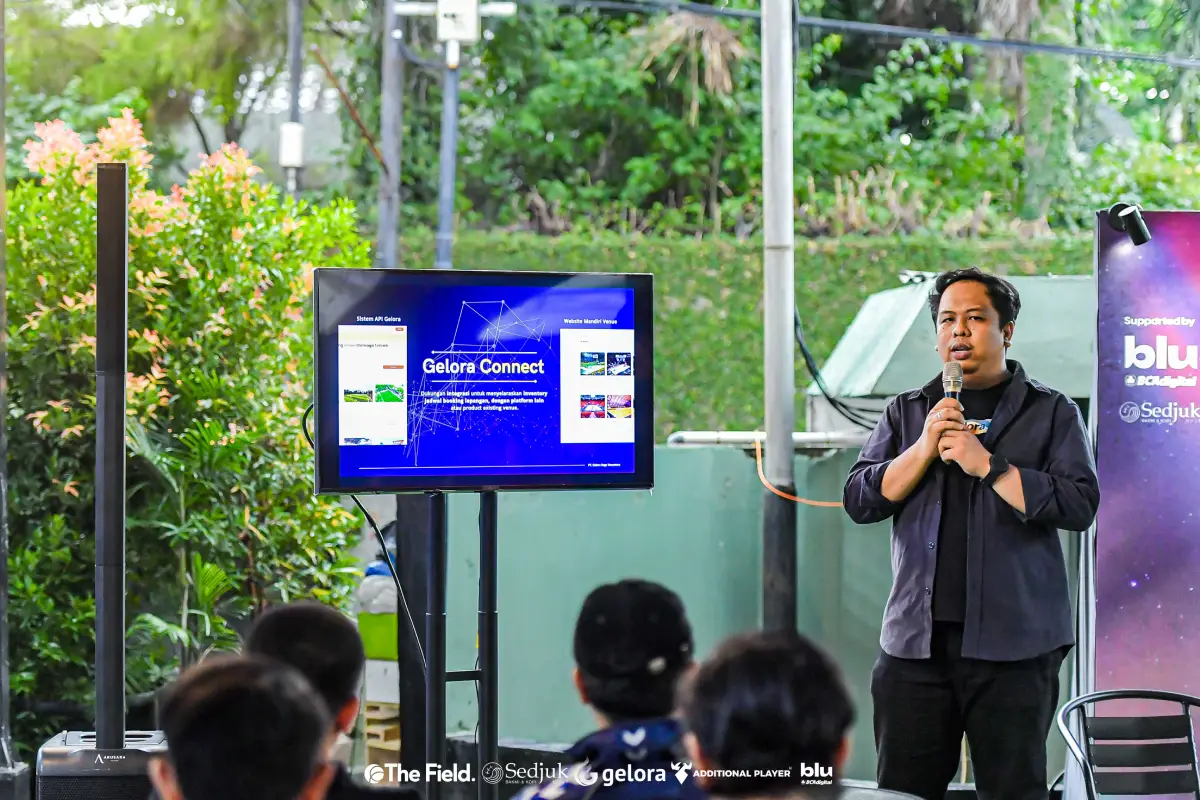
Coinciding with several other new features and products that Gelora wanted to announce, the team agreed to make the quick-booking feature one of the highlights for the media conference. The rollout of the "Fast Booking" feature will be done gradually or through a full release, depending on the agreed product strategy. Once released, my team and I will continuously monitor its performance by analyzing usage data and direct user feedback. This step is crucial for identifying areas for further improvement and ensuring that "Fast Booking" provides an effective solution—especially for experienced users—while significantly increasing booking traffic through the app.
Result
After the feature was released, the next step was to validate its impact using real product data. As a Product Designer, I believe every solution should be evaluated based on measurable outcomes—not just how good it looks during the design phase.
The implementation was evaluated using the following key metrics:
- Growth in the number of bookings made through the app.
- Growth in new user registrations (sign-ups).
- Performance during the most relevant post-launch validation period.
The analysis was conducted using App Monthly Bookings and App Monthly Sign-Up data from Metabase, covering the period from April 2024 to June 2025. As context, the Gelora App was officially launched in March 2024. The booking friction was identified during Q3 2024, prioritized in the Q1 2025 product roadmap, and the Fast Booking feature was released in March 2025. Therefore, the primary validation period focuses on April to June 2025.
Booking Analysis
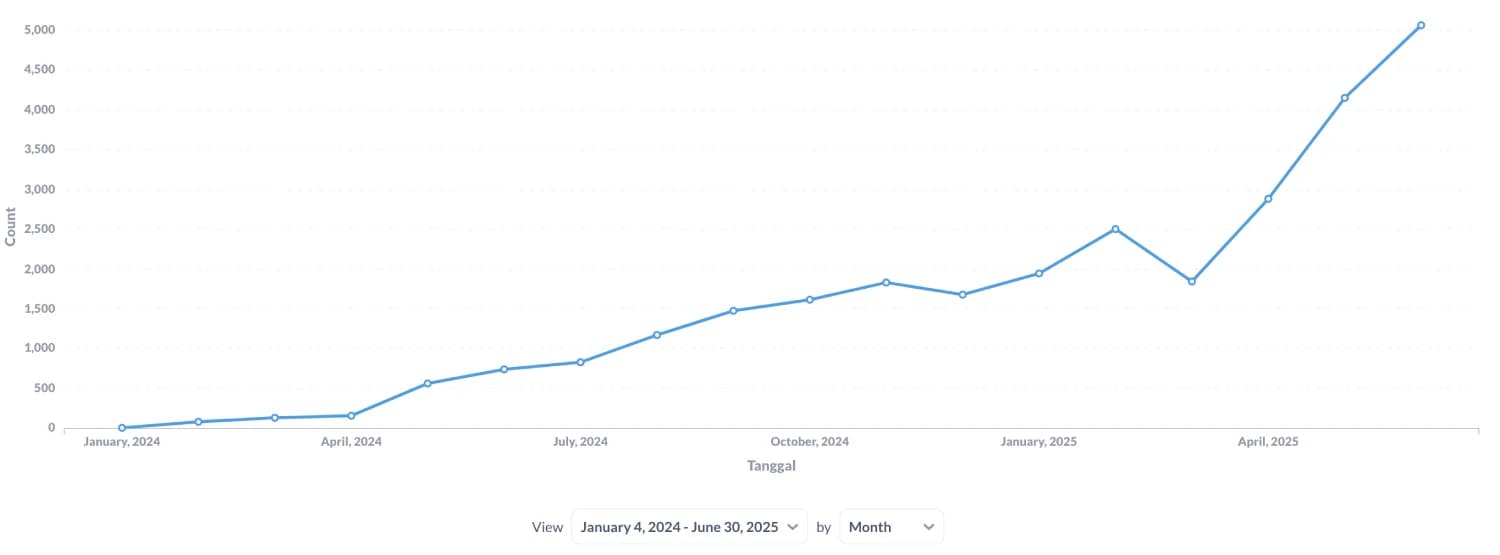
- Initial Stage (Jan – Mar 2024) : Booking volume remained relatively low because the application was still in its early launch phase and officially became available in March 2024.
- Steady Growth (Apr 2024 – Jan 2025) : Bookings increased consistently over the following nine months, indicating healthy user adoption and continuous product growth.
- Peak & Temporary Decline (Feb – Mar 2025) : Bookings reached their highest point in February before declining in March due to the Ramadan season. During this period, the Fast Booking feature was gradually rolled out.
- Growth Surge (Apr–June 2025) : Following Ramadan, bookings increased significantly and reached an all-time high in June 2025. This upward trend suggests a positive contribution from the Fast Booking feature alongside other product initiatives introduced during the same period.
Sign-Up Analysis
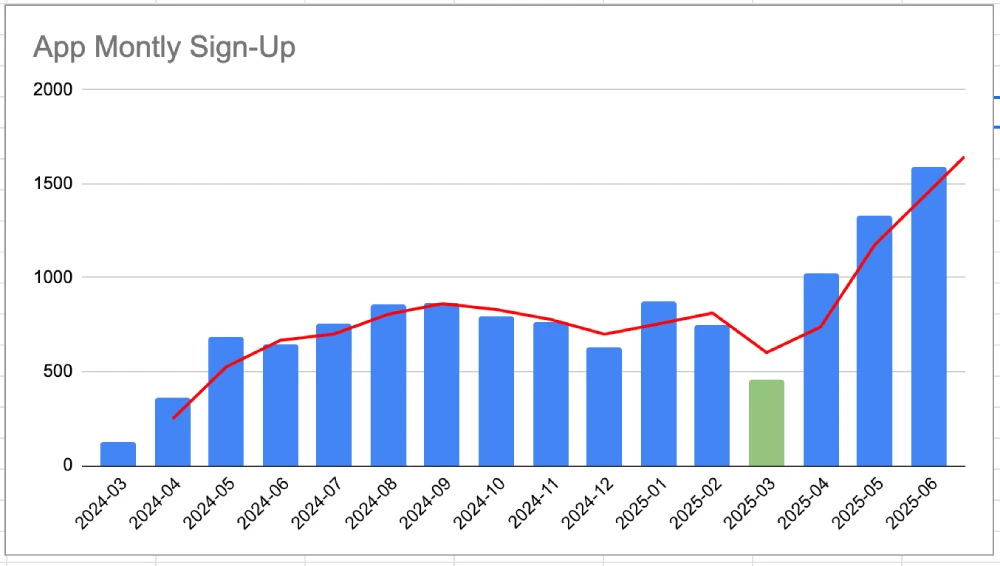
- Early Growth : New user registrations showed a positive trend from the beginning of the product launch.
- Growth Period (Apr – Aug 2024) : Sign-ups increased rapidly and reached their first peak in August 2024.
- Stable Period (Sep 2024 – Feb 2025) : Growth remained relatively stable with only minor fluctuations.
- March 2025 Decline : User registrations decreased during Ramadan, coinciding with the release of the Fast Booking feature.
- Recovery (Apr – Jun 2025) : Sign-ups recovered quickly after Ramadan and reached their highest level in June 2025.
Conclusion
The data suggests that the primary challenge was not the booking flow itself, but the different needs between first-time users and returning users. By understanding these behavioral differences, Fast Booking was designed as a more targeted solution. Its implementation contributed to Record-high Booking Activity while also supporting continued growth in new user registrations.
Wrap-Up
Every solution presented in this case study started with user feedback. Each idea was then validated through user observation, product data, and experimentation before being implemented. This process reinforced one of my core beliefs as a Product Designer: product decisions should not be driven by assumptions, but by a deep understanding of user behavior and validated through data.
By combining user insights with measurable outcomes, products can solve real user problems while creating meaningful business impact.
The author assumes full responsibility for the authenticity and integrity of all text, images, and design assets presented in this publication. All content is original work protected under applicable copyright laws. Unauthorized copying, reproduction, distribution, modification, or commercial use without prior written permission may result in legal action.