The Design Journey
Mental Health & Wellbeing App (Part - 1)
Background
This holistic documentation is part of a project completed during the Insan Desain Product Bootcamp, a professional learning program led by experienced product practitioners from companies such as Gojek, Tokopedia, Tiket, and other leading technology organizations.
As a product practitioner, I believe experience should continually evolve alongside industry best practices. I joined this program to broaden my perspective, validate the approaches I have developed throughout my career, and gain deeper insights into how experienced product leaders make decisions when building digital products at scale.
This documentation illustrates the end-to-end product design process—from identifying problems and understanding user needs through a Human Interaction Design approach, to exploring solution alternatives and delivering functional, validated solutions that create meaningful value for both users and the business.
To me, the true value of this documentation lies not only in the final outcome, but also in the thinking process, decision-making framework, and methodologies applied throughout the product development journey. I hope it serves as both a reference and a reflection on how thoughtful product decisions are made in practice.
Topic: Mental Health & Wellbeing
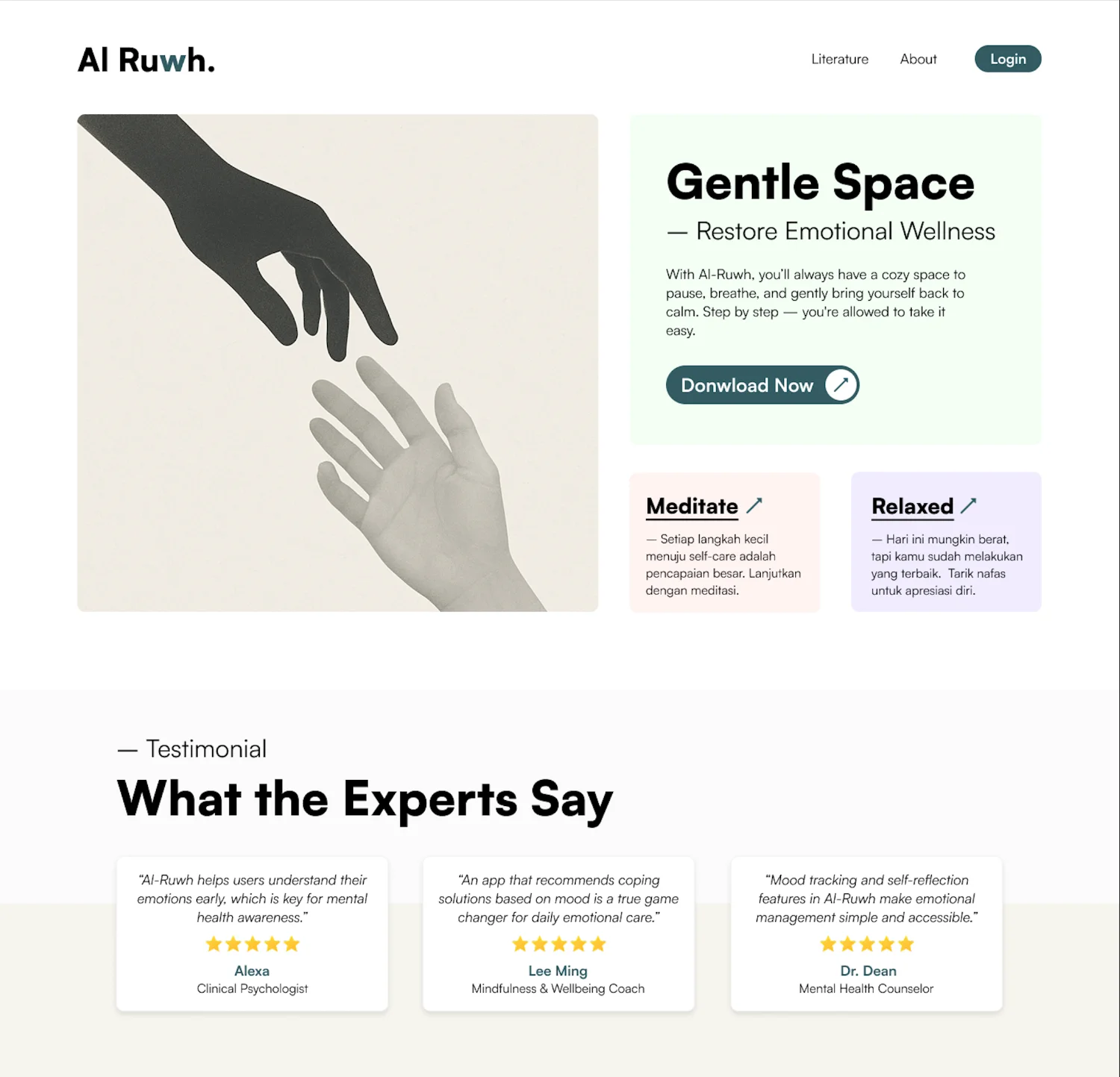
More than just a mood and stress tracker, the author aims to build a digital safe space to help users navigate emotional complexities through personalized self-care methods.
Background Problems
The UXResearch Process : Once the theme has been established, the next step is to identify "The Problems". There are many ways to define a problem, such as gathering data from existing sources or seeking new information. Both are relevant as long as there is an unresolved issue, especially if we know that current solutions do not have a significant impact.
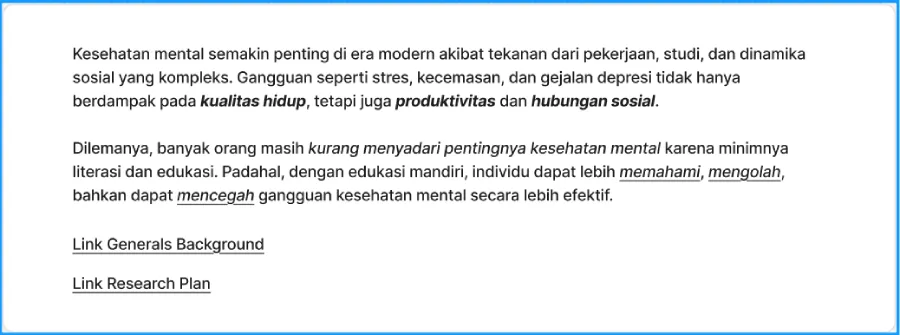
To ensure a structured problem identification process, we use a mapping technique called "Mapping Background Problems." This begins with conducting general research. For example, what issues are currently trending regarding mental health and wellbeing? What topics are viral? What is the urgency of the problems faced by society today, and why is finding a solution crucial? Additionally, what significant challenges could provide a broad positive impact if successfully resolved? The research results are then narrowed down into key problem statements. These statements serve as a compass for developing features and experiences for the Mental Health & Wellbeing application.
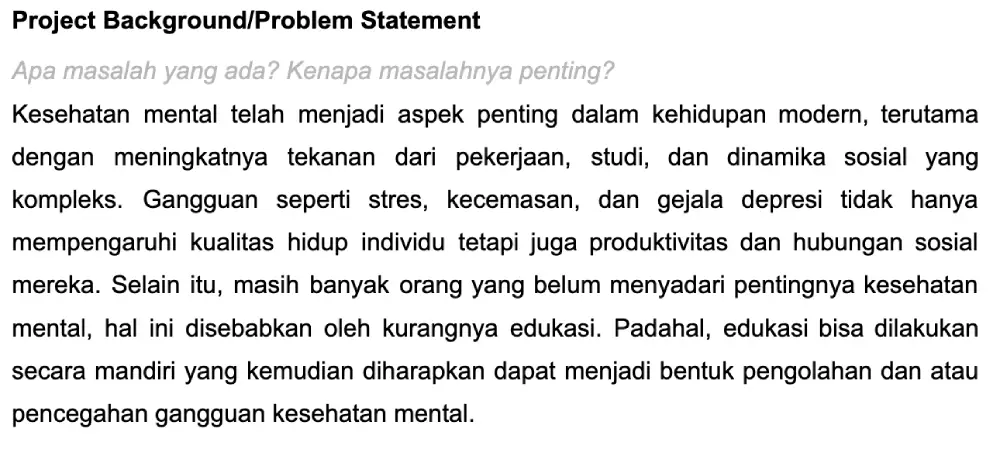
Next, we will determine the Project Objective. The goal is to ensure that what we aim to achieve, solve, or improve remains aligned with the problem statement.
After establishing the Project Objective, we define the Research Objective to strengthen our goals. This research process is a fundamental pillar before conducting more in-depth research. Determine the expected outcomes of this study—what specific objectives do we want to understand further?
Furthermore, it is important to define the Target Scope based on the previously set objectives. Identify the users and the segments to be addressed, and establish their specific criteria.
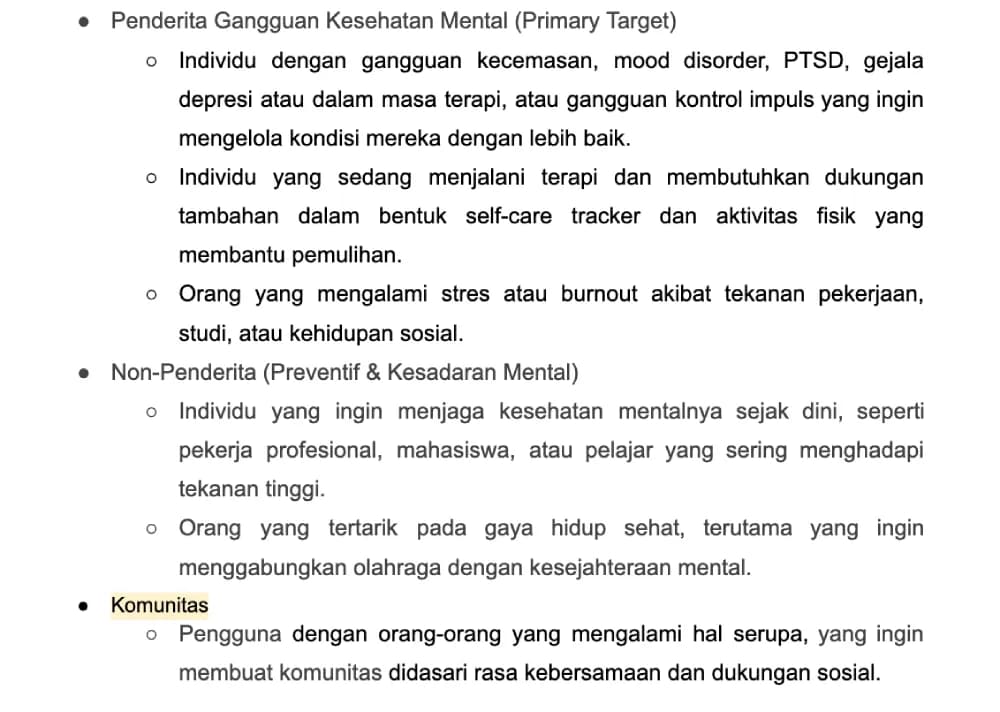
The next step is the Research Methodology. Here, we must decide which research methods to use to ensure the validity, reliability, and credibility of the research conclusions.
- Research Design: Qualitative
- Data Collection Instrument: Direct Interview
- Time: 30 minutes - 1 hour
- Number of Participants: 5
- Target Research Audience: (Male/Female, ages 15-20, 20-30, 30-40, 40-60)
In the UXR stage, the most critical element that should never be overlooked is the Interview Guideline. This is essential for assisting us during the research process. There are many benefits: it makes interviews more structured and efficient, helps avoid irrelevant topics, reduces bias, saves time, and simplifies documentation and evaluation afterward.
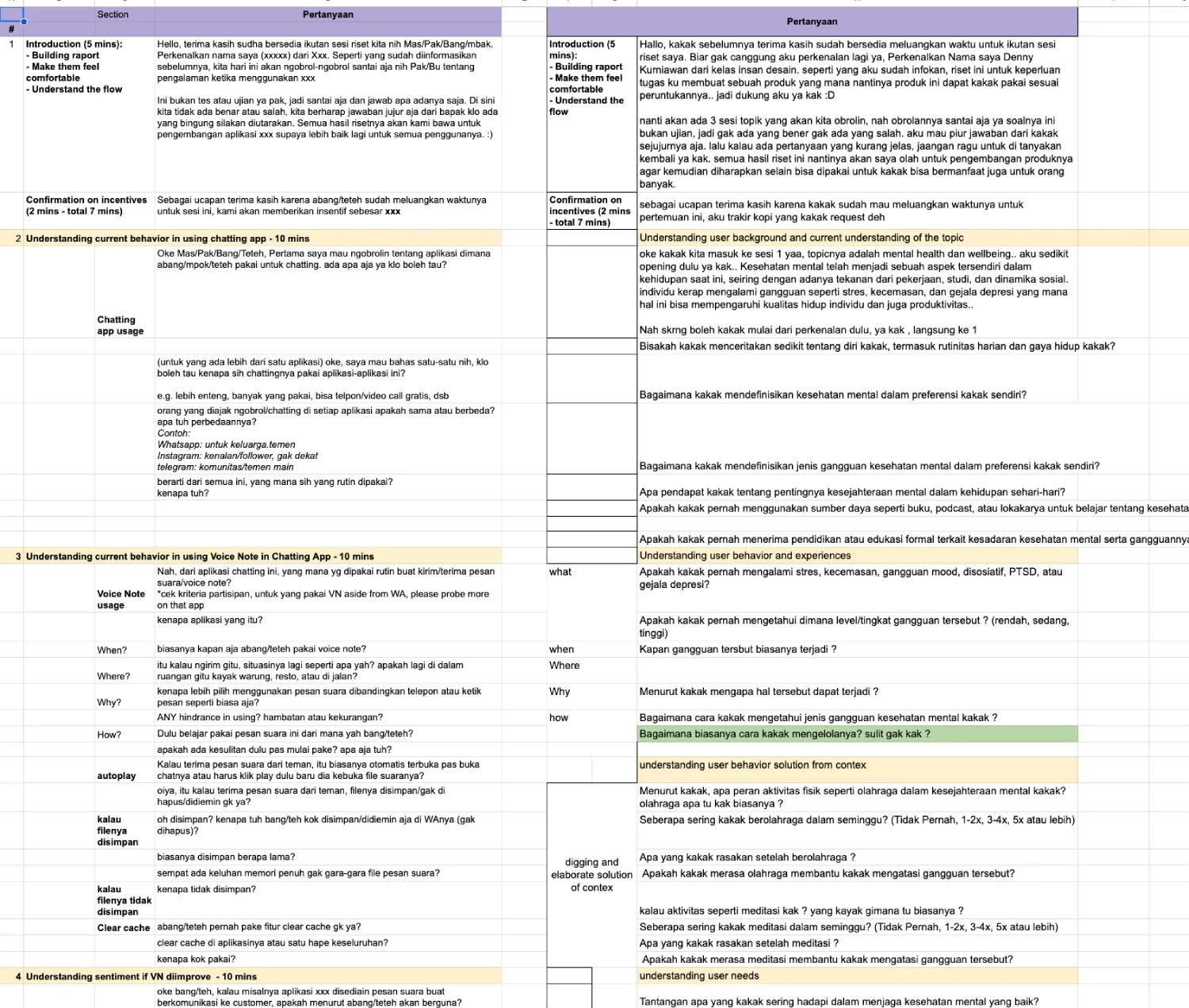
Once all the components are complete, the next step is to conduct research interviews following the guidelines created above. However, before doing so, there is a final step to establish product guidelines or minimum standards: performing a Competitor Analysis.
The benefits of conducting a competitor analysis include:
- Benchmarking Market Standards
- Identifying User Trends and Expectations
- Discovering New Opportunities
- Understanding Market Positioning
- Enhancing Design Mandates
To provide a general overview or guidelines during the initial product development process, we can use design mandates. The objective is to ensure consistency, quality, general standards (which can be seen from competitor analysis results), and efficiency in all design outputs.
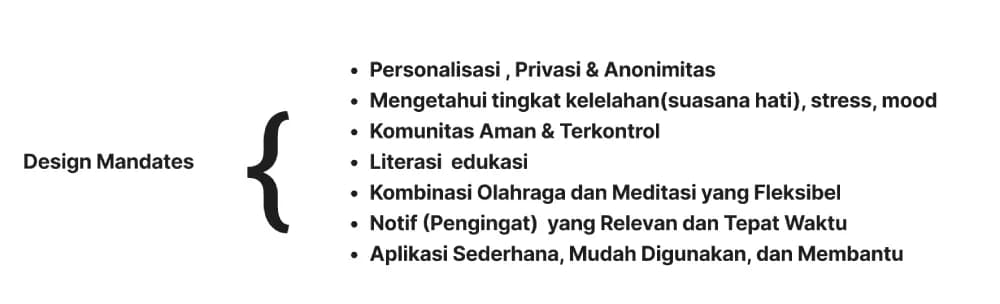
Tips: In designing the product for this project, the Double Diamond framework is used throughout the process. The purpose is to create a structured and user-centered framework. This approach helps to understand the problem deeply, discover various possible solutions, and finally deliver a product that is innovative, effective, and appropriate.
Observe
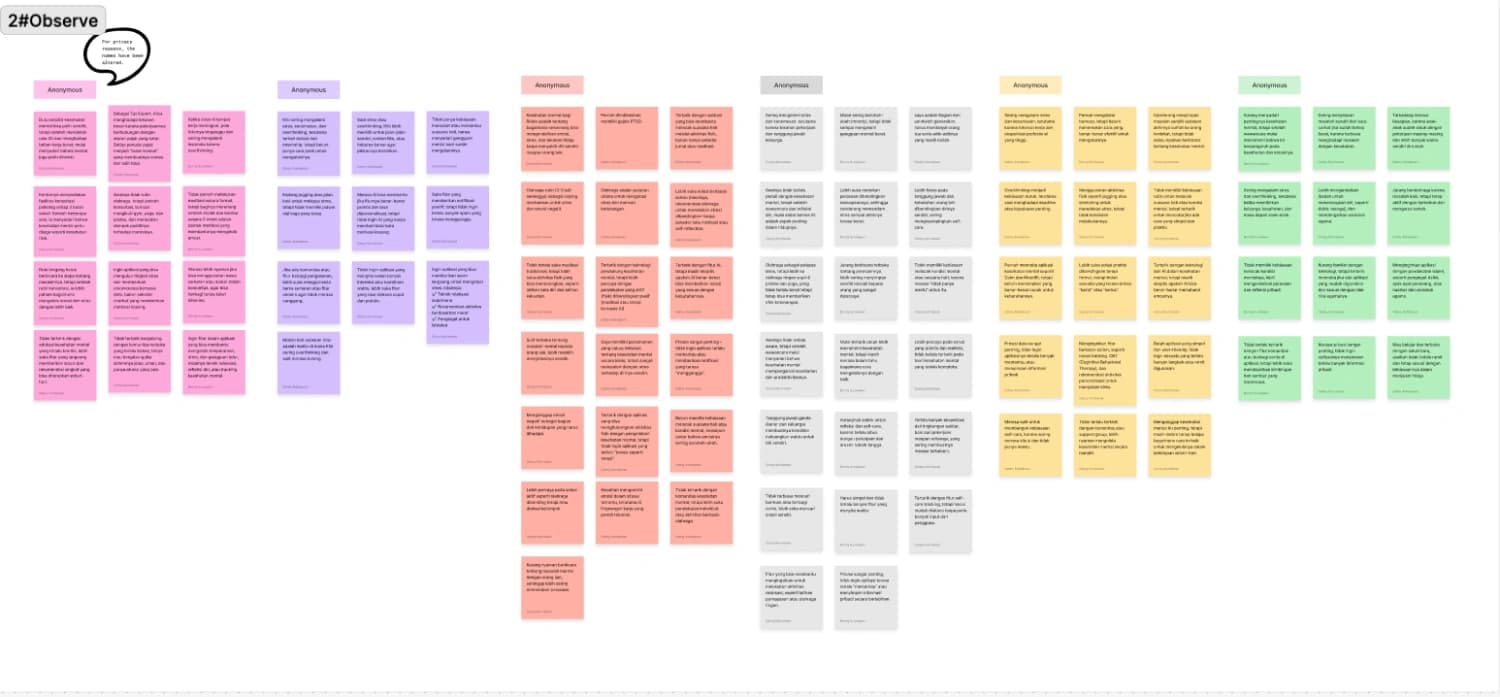
During the interview process, we will obtain a lot of data from various characteristics that we have determined previously. At this stage, we apply the Double Diamond framework, which involves two processes: diverging and converging.
- Diverging: The goal is to understand the problem from various perspectives and characteristics.
- Converging: Conversely, in this process, we narrow down the data we obtained earlier so that we can define the problem in a more specific direction.
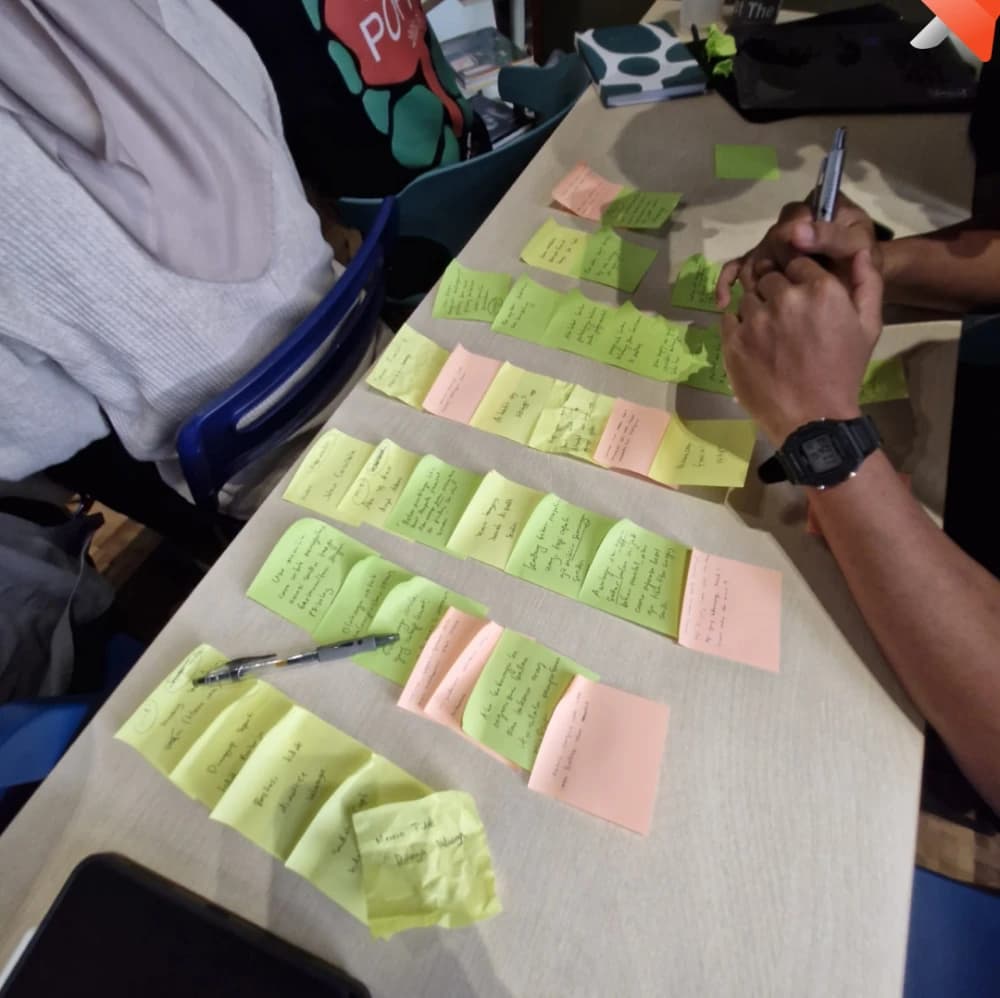
To make the converging process easy and structured, use an Affinity Diagram. This helps to sort and group similar data, making it easier for us to define the problem, gain ideas or insights, and obtain other specific information.
How Might We ? - HMW
In the Affinity Diagram process, we categorize data from various characteristics, which will result in both positive and negative insights. Using "How Might We" (HMW), these insights are transformed into solvable challenges.
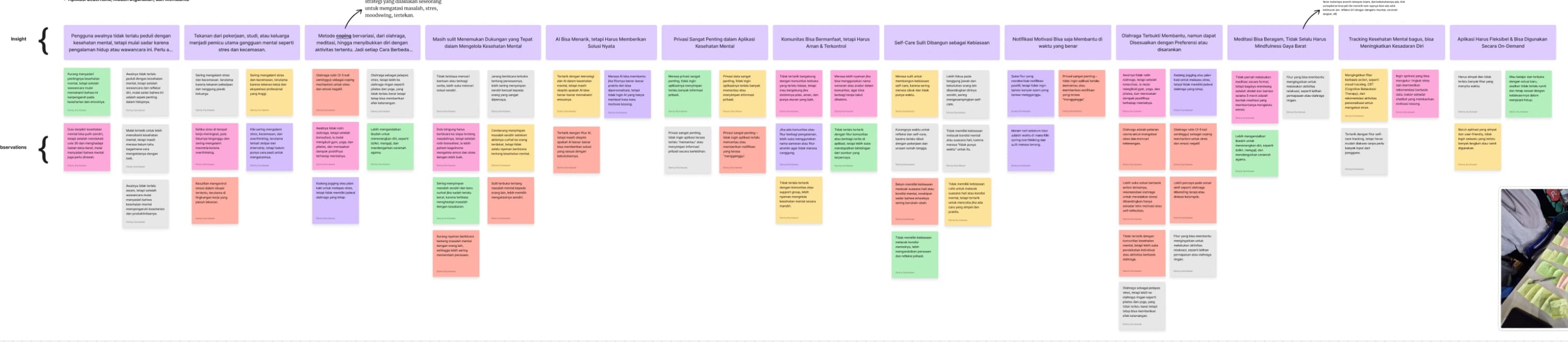
For example, we might find an insight that "everyone has their own unique way of managing their stress." If we connect this to HMW, the insight becomes, "How might we facilitate users with varied coping methods so they can manage their stress well?"
The purpose is to trigger other specific insights or ideas that are relevant to potential needs. This is important because not all obtained insights will necessarily become potential ideas.

Ideation
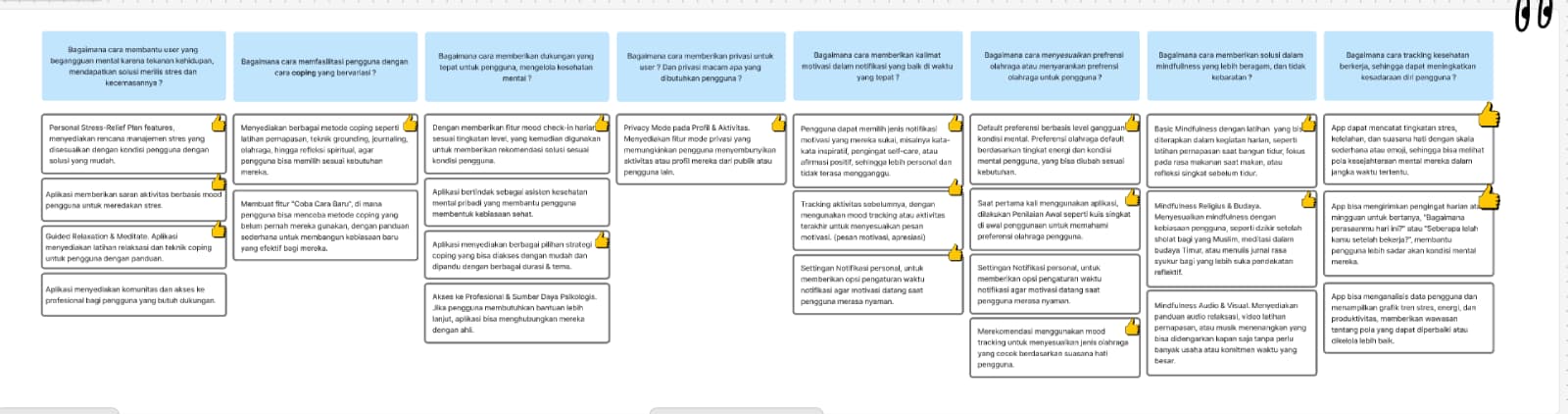
The subsequent step involves providing answers to the "How Might We" (HMW) questions. These HMW insights will be utilized for further brainstorming sessions with the team or relevant stakeholders. The objective is to genuinely discover various insights or solutions to resolve existing problems from diverse perspectives.
However, when determining or defining more specific insights, one may occasionally encounter insights that align with the initial goals and others that do not. Therefore, at this stage, we can reapply the design mandates as a guideline reference to ensure a sharper ideation process.
Selected Ideas - The Clarity Idea
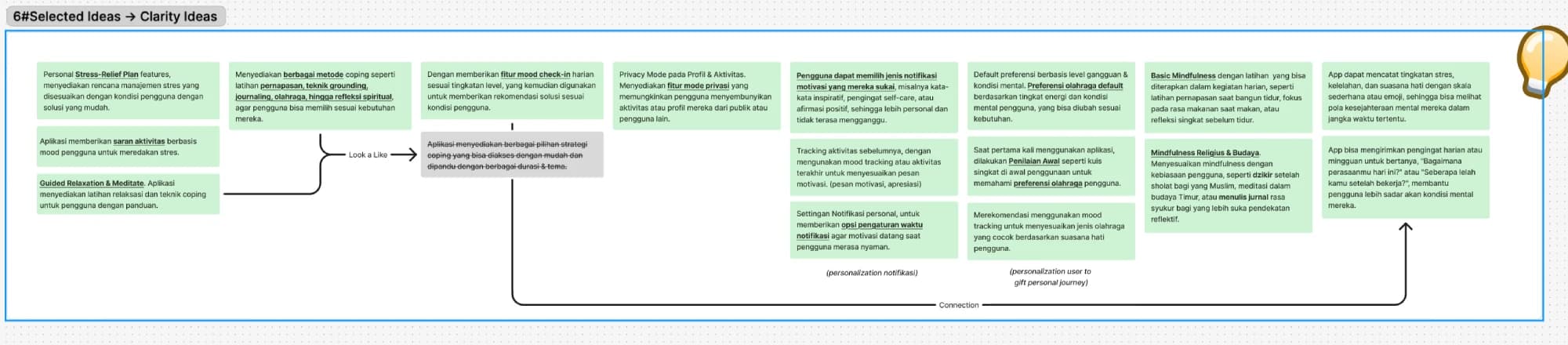
As previously explained, there are occasionally insights that do not adhere to the guidelines within the design mandates. Furthermore, it is not uncommon to find insights that, while not perfectly exact, share similar solutions with other insights or possess mutually supporting connections, as seen in this project. Consequently, it is crucial to re-evaluate and select which insights will be adopted for the final ideation.
One Liner & Napkin Sketch
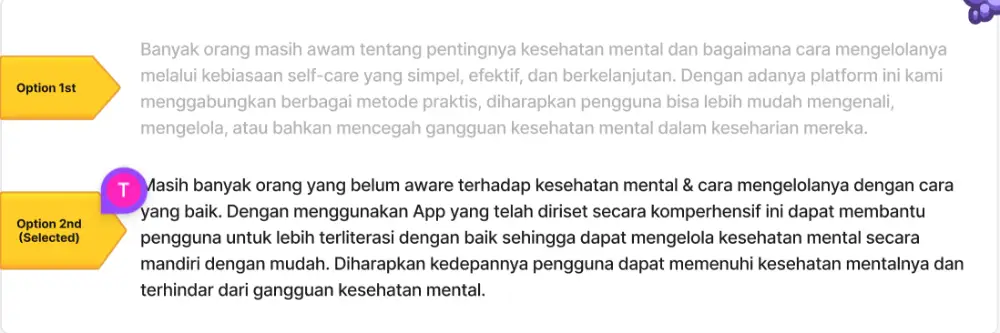
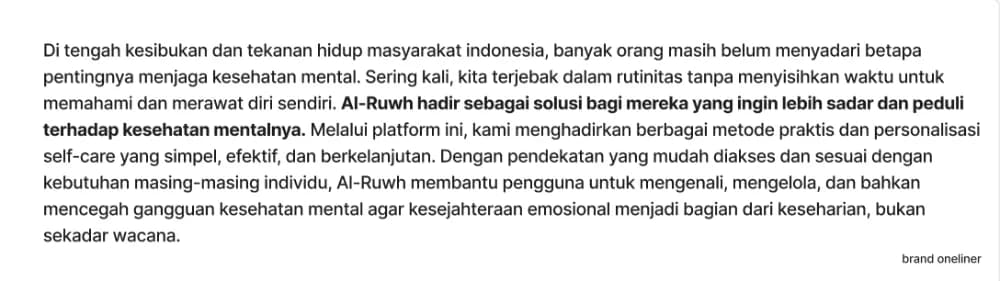
The following step involves the application of the One Liner and Napkin Sketch methods. One Liner is the elaboration of an idea into a single sentence. If this product idea were transformed into a sentence, what kind of sentence would represent the product's solution? The fundamental purpose is to facilitate easier product communication to the audience.
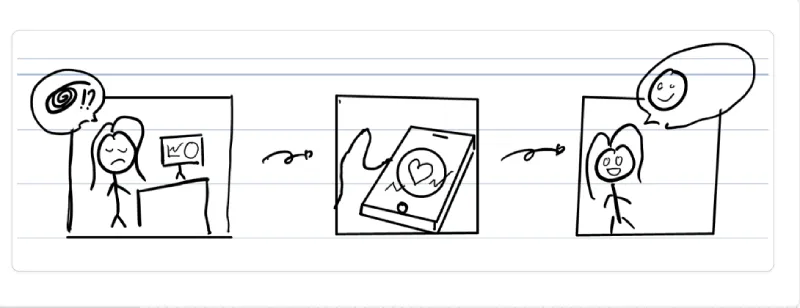
Napkin Sketch aims to provide a visual representation; it illustrates how the product would look if depicted visually. Naturally, since this is a sketch, the visual is typically a rough drawing. The benefit of this process is that it helps create an overview of the flow regarding how the application will eventually be used.
. . . . . To be Continue at Part 2 . . . . .
The author assumes full responsibility for the authenticity and integrity of all text, images, and design assets presented in this publication. All content is original work protected under applicable copyright laws. Unauthorized copying, reproduction, distribution, modification, or commercial use without prior written permission may result in legal action.