Phygital at Scale
Scaling the Phygital Ecosystem through Self-Service Kiosks
Background
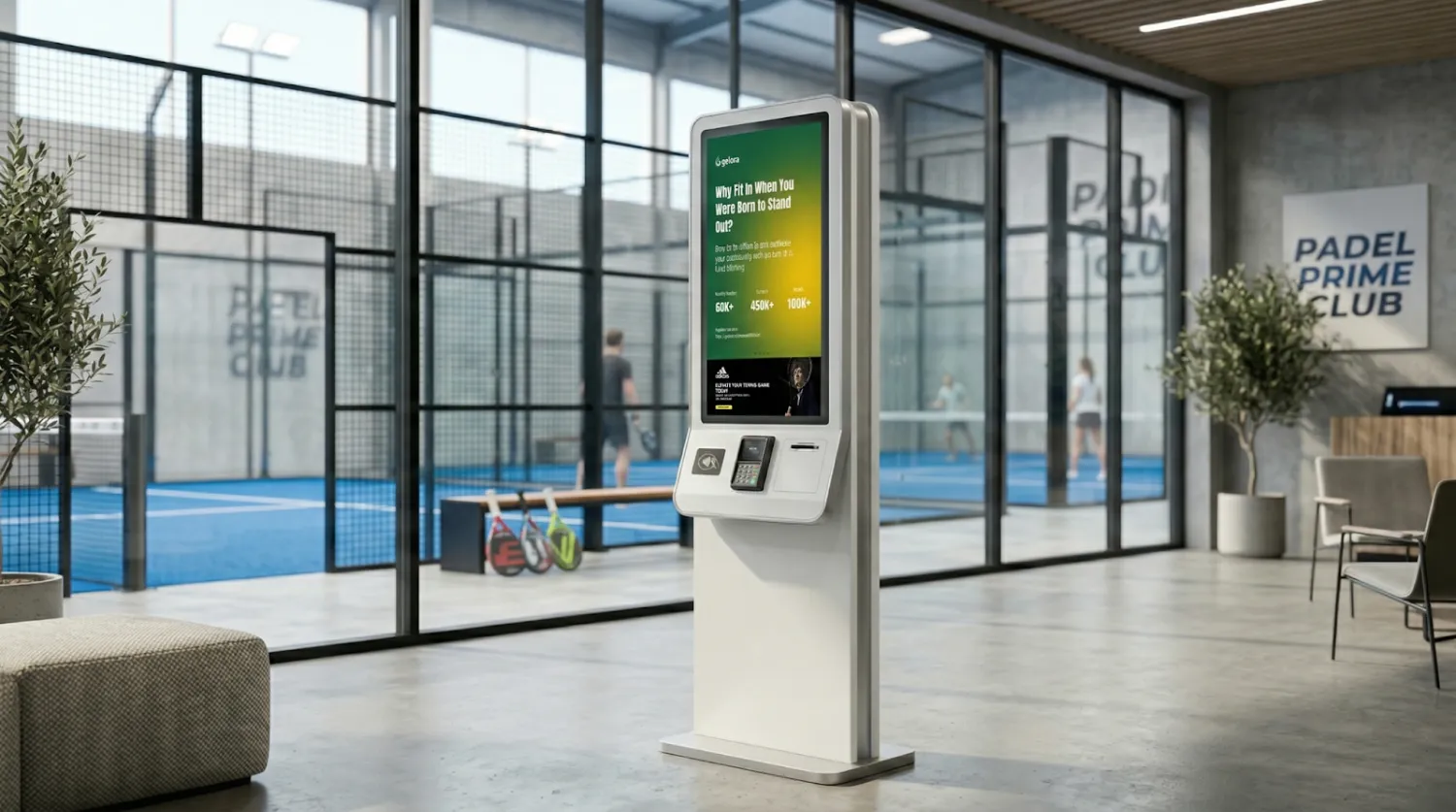
Following the successful digitization of court-side transactions via the BTN x Gelora Smart EDC, our next strategic objective was to strengthen touchpoints in lobby areas and other crucial points within expansive venues.
While the EDC serves as a solution for staff mobility, the Gelora Kiosk is the answer to user autonomy and operational scalability. The Kiosk acts as a new mainstream product to complete Gelora's "Phygital" (Physical-Digital) ecosystem—ensuring that every part of the venue, from the entrance to the courts, is connected within a synchronized cloud system.
Discovery: Observation & Insights
Most sports complexes face similar scalability challenges. Operationally, a typical venue is only equipped with a maximum of two EDC units located at the cashier desk.
Imagine a venue with more than four courts operating at full capacity during peak hours. When all players finish at the same time and wish to perform simple transactions—such as purchasing mineral water, snacks, or extending their playtime—they must gather in one specific area (lobby/lounge/cashier). Total dependence on limited EDC devices can trigger long queues and increase staff workload disproportionately and suddenly.
This situation led to several unresolved issues:
- Lost Sales Opportunities : Players often cancel their intention to buy drinks if they have to wait in line. Kiosks placed at strategic points near the courts capture these "impulse buys" instantly.
- Human Error : In crowded situations, staff members are often rushed to serve customers, which increases the risk of input errors.
- Staff Burnout vs. Service Quality : Staff energy is often exhausted just by handling hundreds of micro-transactions. With Kiosks, staff can focus on essential venue maintenance and better guest services.
- Data Blindspots : Without distributed transaction points, management finds it difficult to track spending behavior patterns at specific locations within the venue.
Jobs To Be Done (JTBD)
- The Walk-in Player
- "When I finish a high-intensity match and feel dehydrated, I want to purchase a drink instantly at the nearest point, so I can maintain my post-game momentum and go home without the friction of a queue."
- "When I finish the game and want to added more rental time, I can go to nearest point to check and get easy-quickly access without queuing or asking someone, then I can pay immediately."
- Venue Owners
- "When the venue is at full capacity, I want to capture every impulse-buy opportunity across the field without increasing my staff headcount or overhead costs."
- "When the lobby is crowded, I want to offload repetitive micro-transactions to a self-service system, so I can focus on hospitality, venue maintenance, and complex guest inquiries."
Ideation
The primary ideation for this project was to build a "Self-Service Ecosystem" that provides complete autonomy to the users. I identified a major bottleneck where the centralized cashier system caused long queues during peak hours, often leading to lost sales. By shifting to a decentralized model, we eliminate the need for players to search for staff members who may be busy elsewhere.
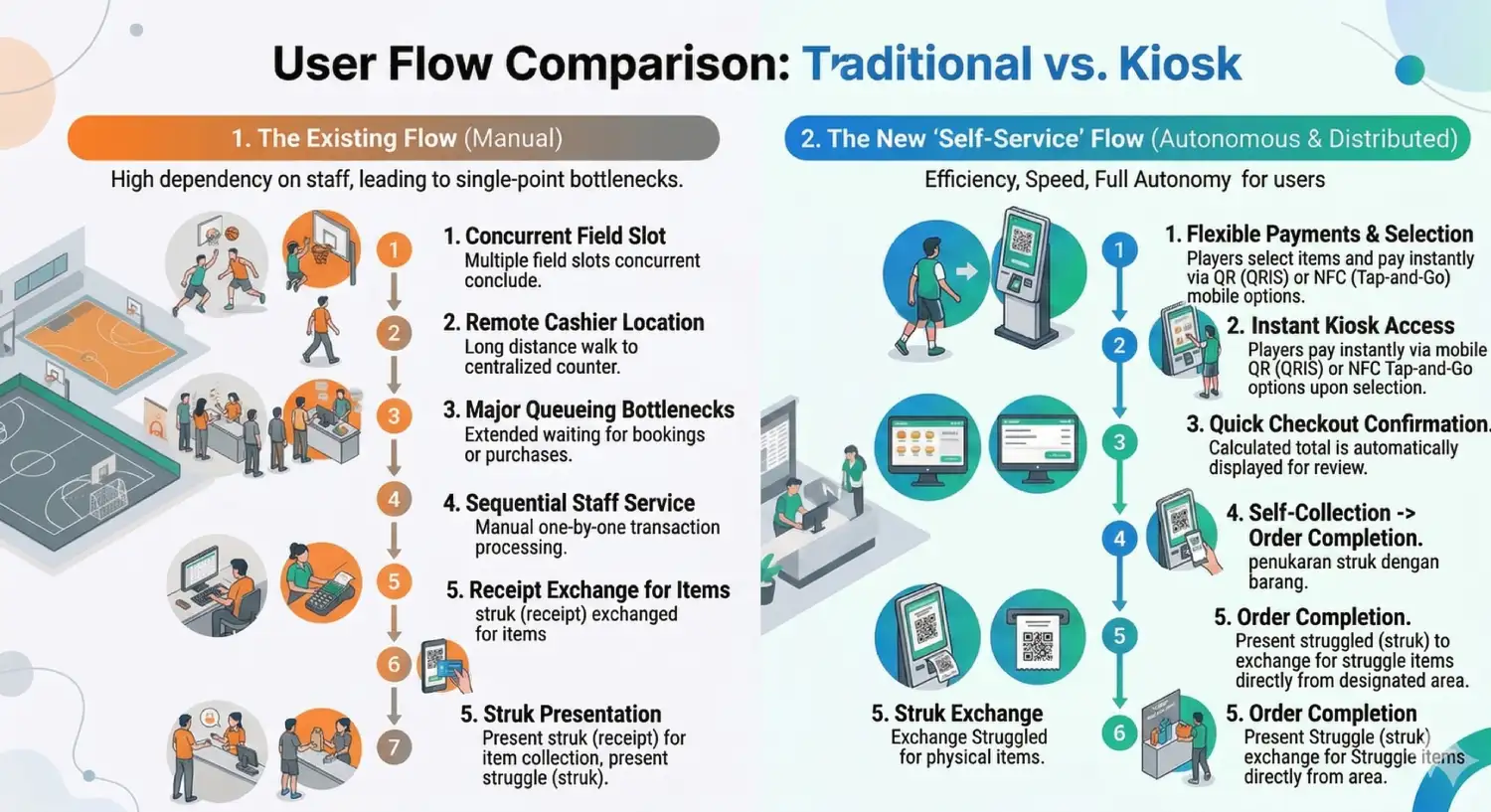
The core idea was to bring the transaction points directly to the users near the courts. This shift significantly improves speed and efficiency throughout the ordering and payment cycle. Ultimately, the objective of this solution is to foster user convenience and seamless practicality, ensuring that every part of the venue is connected to a fast and independent service.
Concept Model
The Concept Model is based on self-service users—those who value speed and prefer to avoid queues. Without needing to find staff members on duty, players can now perform:
- Quick Booking : Every transaction on the Kiosk is synced in real-time with the Gelora Cloud. This ensures that court availability and snack inventory are always accurate across the whole venue. Selecting court slots visually and paying instantly and independently.
- Self-Service Shop : Purchasing F&B (retail) through a tap-and-go scheme. Payment receipts can simply be shown to the cashier or exchanged at the canteen. By automating micro-transactions (like buying water or extending play time), the system takes the repetitive work away from the staff.
- Integrated Payment : Synchronization of payments that is as secure as the previous EDC and App systems.
Design Strategy
As a designer, the main challenge was not merely increasing the screen size, but maintaining "Cognitive Consistency." Users should feel familiar when using the Kiosk, as if they were using a giant version of the application they already know.
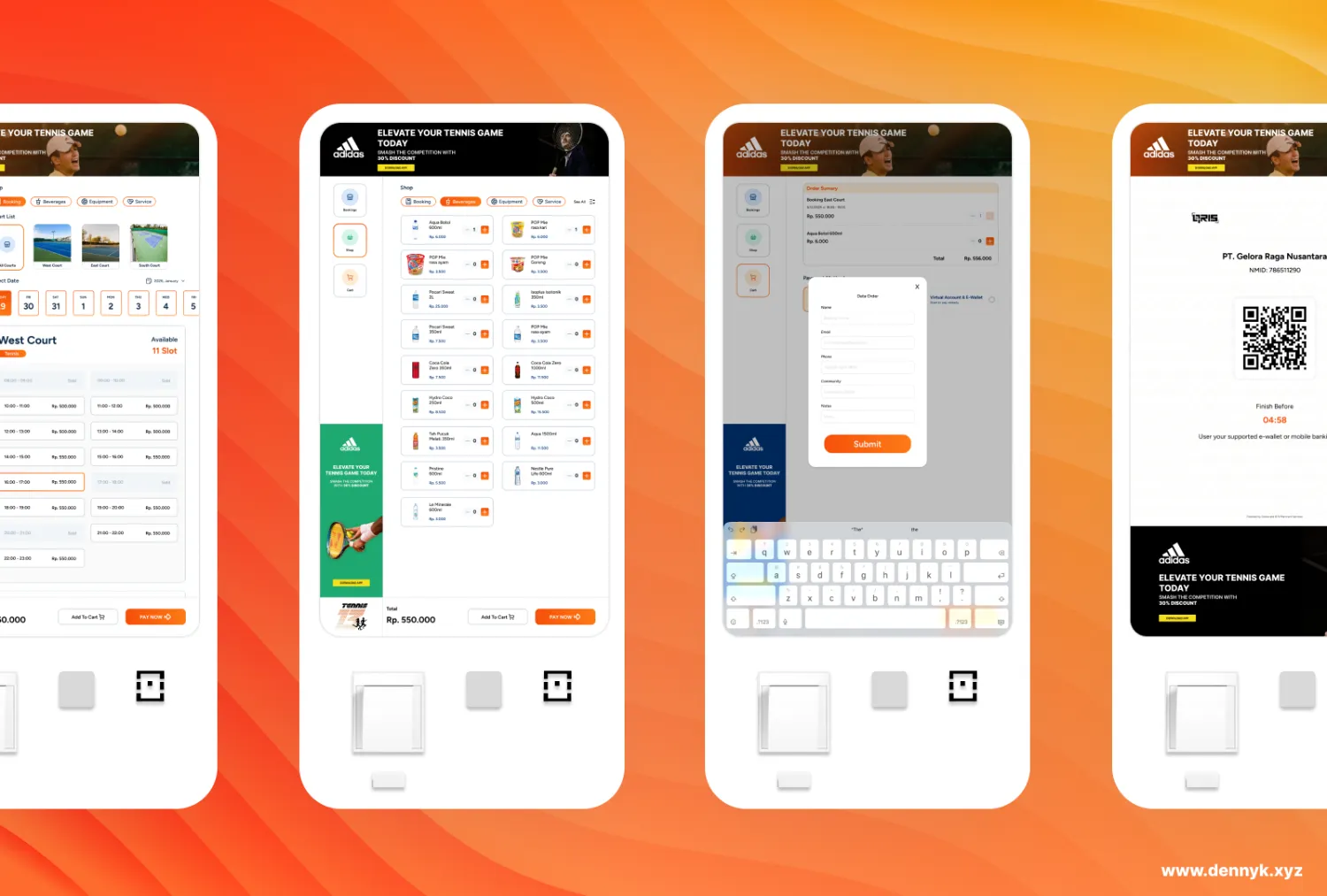
- Consistent Design Language : I maintained the visual hierarchy and components from the EDC and Mobile App versions. This minimizes the learning curve—what they see on their phones is what they see on the large screen.
- The Billboard Effect (Ad Placement) : With a 21-inch portrait screen, the Kiosk serves as both a transaction tool and a "digital billboard." We strategically placed ads in the headers and sidebars in a non-intrusive way.
- Touch Ergonomics : Although the screen is much larger, the placement of main action buttons remains focused on the "comfort zone" (reachable area) to ensure the experience stays intuitive.
Wireframes
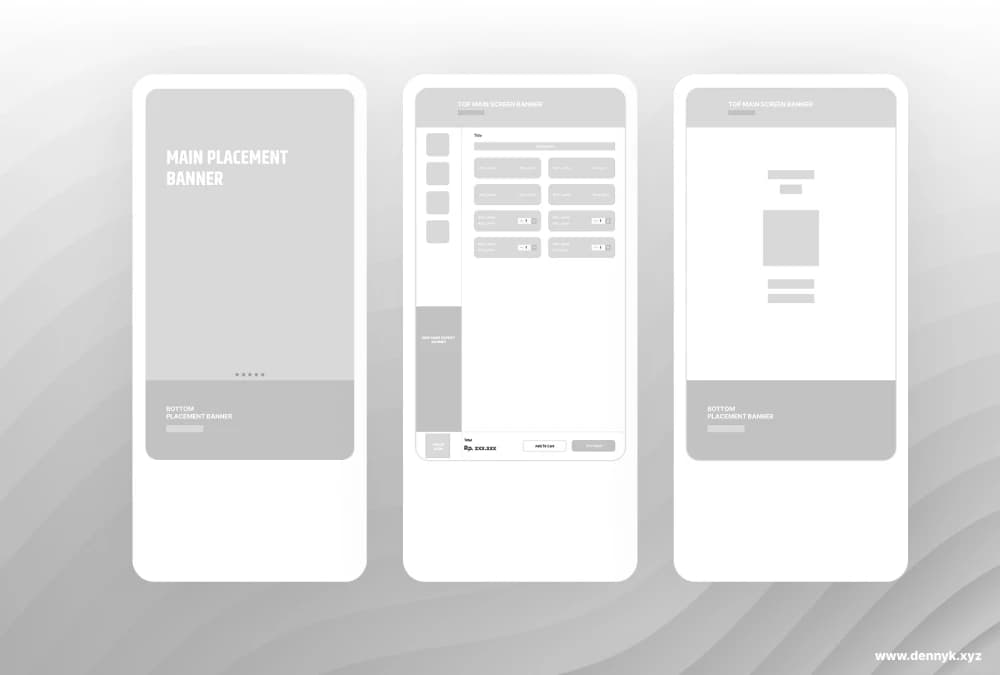
In this phase, I developed a structural framework to ensure that every functional element has a logical placement on a large-scale screen. The primary focus is to organize the information hierarchy so that the self-service transaction flow can be understood by users instantly without staff assistance. This wireframe serves as the technical foundation that ensures navigation effectiveness before moving into deeper visual details.
High-Fidelity UI : Final Visualization & Precision
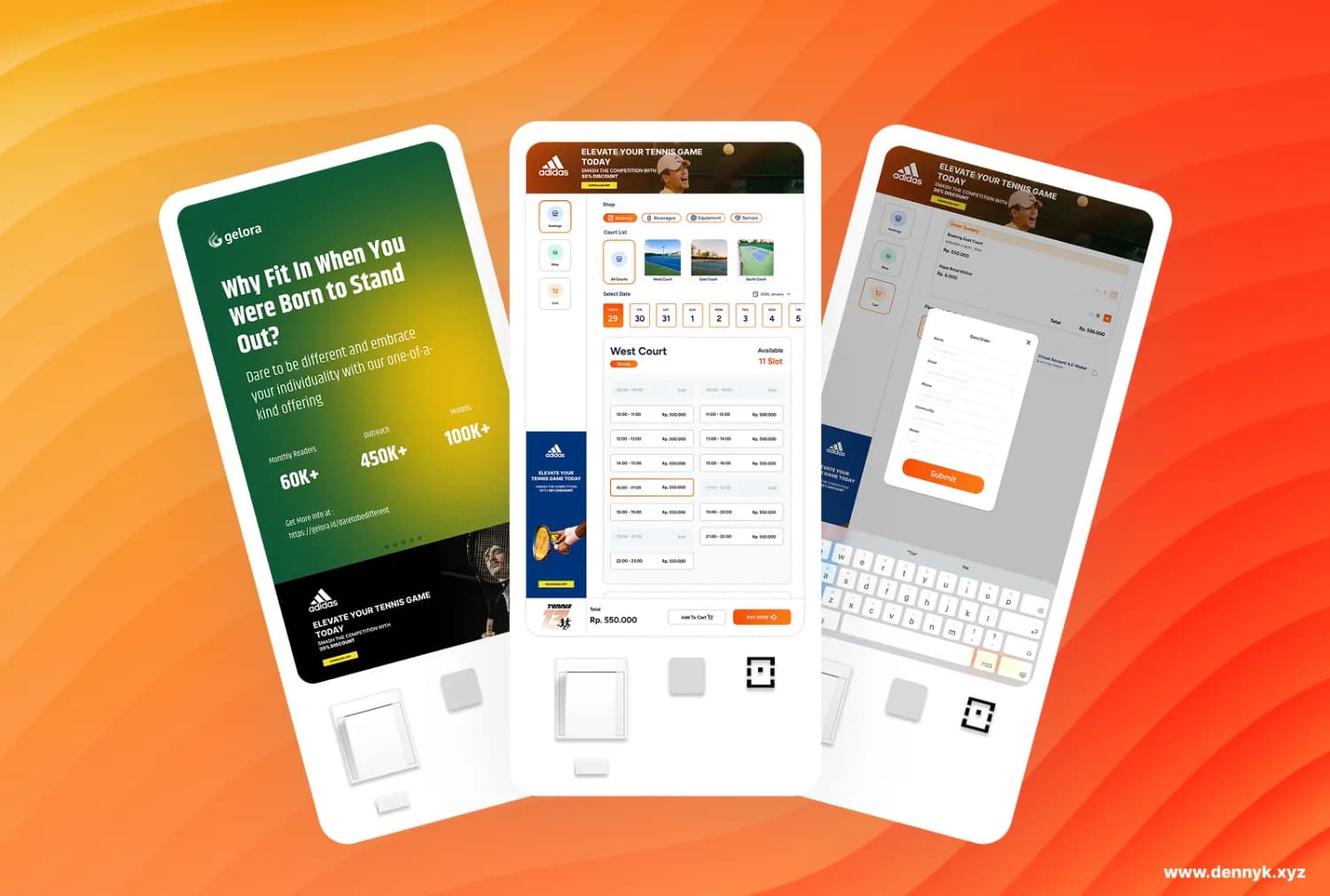
This stage involves bringing the structural framework to life in a final appearance that is precise, detailed, and ready for implementation. I refined the visual aspects to provide maximum clarity of information and a professional look for the venue location. The result is an interface that is not only functional but also provides a sense of security and increases user trust when performing independent transactions.
Measuring Success
In this MVP phase, success is measured through several key indicators:
- Operational Efficiency & Staff Productivity
Significantly reducing the workload of cashier staff during peak hours. Success is measured by a decrease in queue duration within the lobby area and the migration of micro-transactions (F&B/Retail) from the cashier to the Kiosk by up to 50%.
- User Adoption Rate
Tracking the percentage of walk-in users who choose self-service over staff assistance. A high adoption rate demonstrates that the interface design successfully provides familiarity and easy access for players.
- Revenue Growth
Validating the increase in retail sales (Impulse Buying) through strategic Kiosk placement near the courts. This metric assesses how effectively the Kiosk captures transaction opportunities that were previously lost due to queuing constraints.
- Ad Engagement & Fill Rate
Measuring the effectiveness of "The Billboard Effect" through the total number of digital ad impressions displayed. This initiative opens a sustainable New Revenue Stream for both the venue and brand partners.
- Data Accuracy
Minimizing human error and inventory mismatches through automated transaction recording, which is synchronized directly with the Gelora cloud system.
Summary
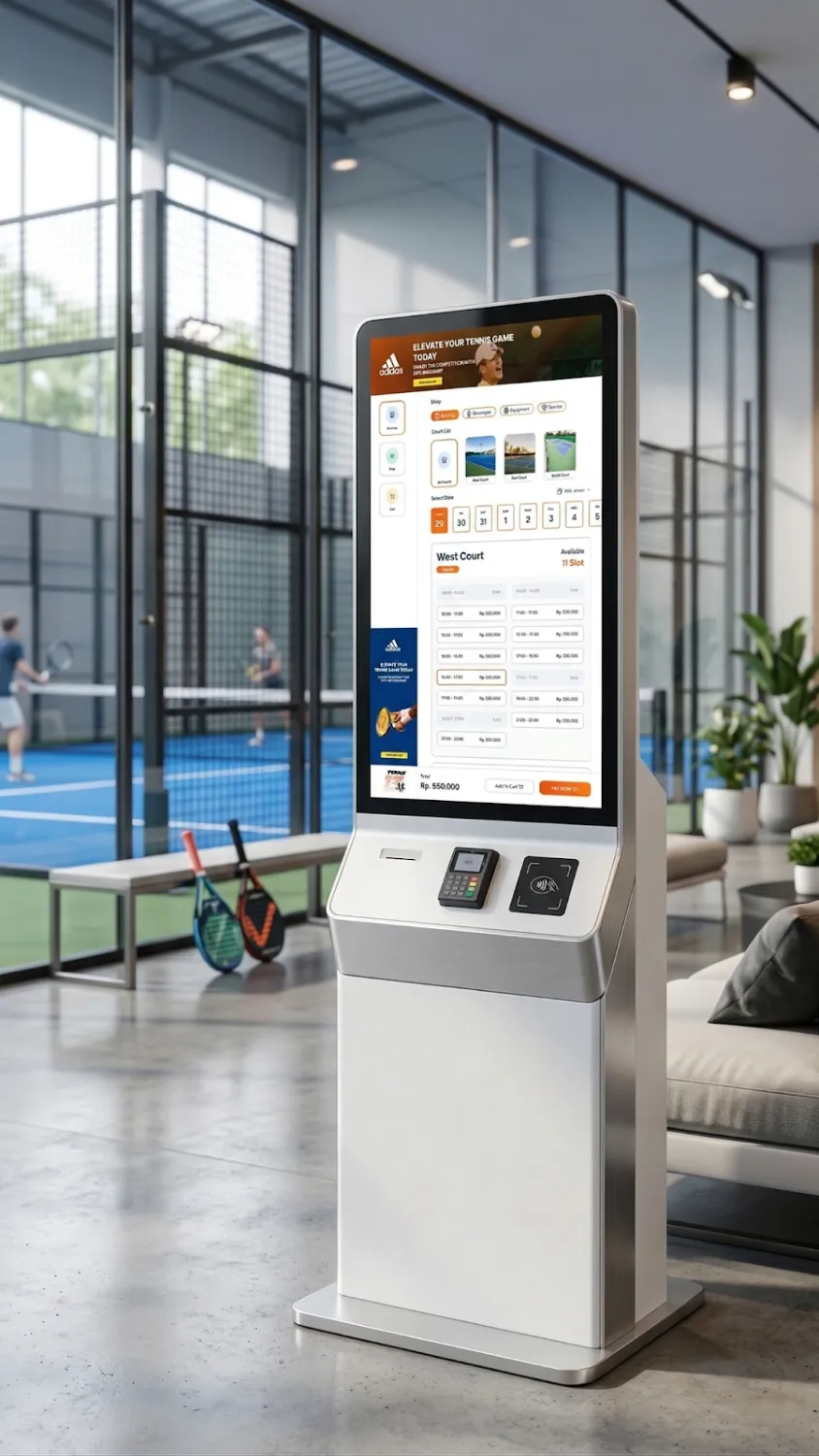
In the future, the Kiosk is prepared for deeper integrations, such as automatic QR check-in systems, physical membership card usage, access wristband printing, and automated locker key integration.
The author assumes full responsibility for the authenticity and integrity of all text, images, and design assets presented in this publication. All content is original work protected under applicable copyright laws. Unauthorized copying, reproduction, distribution, modification, or commercial use without prior written permission may result in legal action.